DKS ServiceWorks
Choosing professional construction tools is not simply a matter of buying the strongest model. The right choice depends on the task, material, worksite conditions, operator skill, and expected workload. A cordless drill may perform well indoors, yet lose power quickly on a cold, exposed site. A heavy rotary hammer may finish concrete faster, but its weight can increase fatigue and handling errors.
This guide explains how to choose tools for professional construction work with practical judgment and verified information. Experienced contractors usually compare torque, runtime, vibration, dust control, warranty coverage, replacement parts, and manufacturer testing. They also check whether accessories fit securely and whether the tool suits daily use. Small details matter. A comfortable grip can reduce strain during an eight-hour shift. A clear battery indicator can prevent an avoidable work stoppage.
Safety should remain part of every purchasing decision. Review the manufacturer’s instructions, site requirements, and applicable local standards before using any equipment. A lower price may look attractive, but frequent repairs can cost more over time. Still, no checklist is perfect. Tool performance changes with weather, maintenance, operator technique, and material quality. That uncertainty deserves attention.
The following tips focus on reliability, productivity, safety, and long-term value. They are designed to help professionals make informed comparisons instead of rushed purchases. Sometimes, the best tool is not the most powerful one. It is the one your crew can control, maintain, and trust every working day.
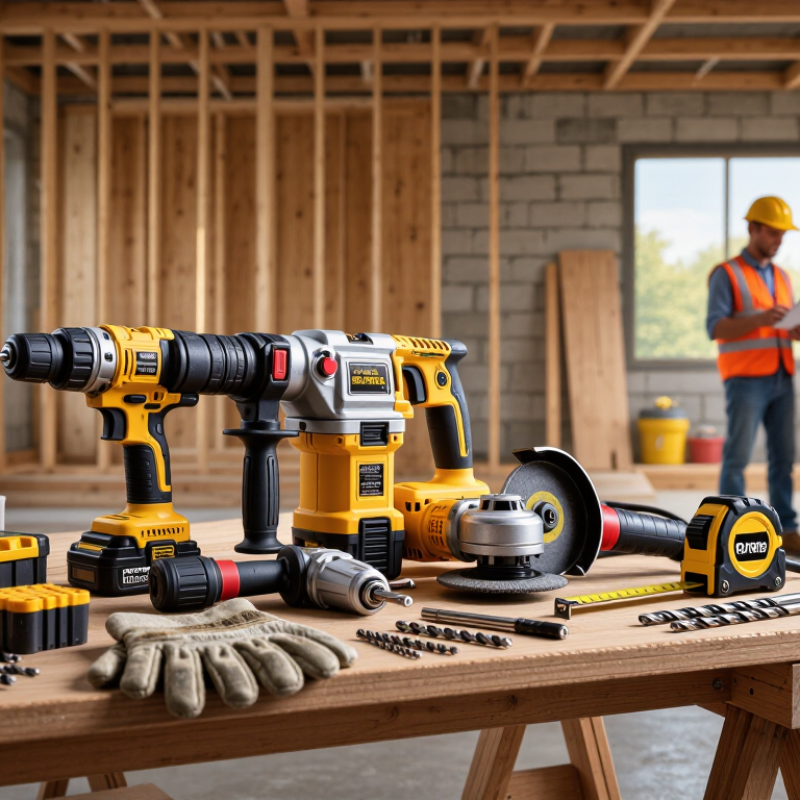
Choosing professional construction tools starts with defining the work, not browsing a catalogue. Write down the material, dimensions, access limits, duty cycle, and expected finish. A bathroom renovation may need moisture-resistant measuring tools, a compact drill, tile-cutting equipment, fastening tools, and dust control. A structural project requires different categories, including heavy-duty drilling, cutting, lifting, and accurate layout equipment. Do not buy everything. That mistake is expensive.
Safety must shape the essential list. The U.S. Bureau of Labor Statistics recorded 1,032 fatal injuries among construction and extraction occupations in 2023. OSHA also identifies falls as a leading cause of construction deaths. Therefore, access equipment, lighting, guarding, and suitable personal protective equipment deserve the same attention as power tools. Check whether each tool matches the substrate and can operate safely in confined or wet areas. Professional practice also means checking noise, vibration, battery endurance, maintenance access, and operator training. Small details matter.
Real sites rarely follow the plan perfectly. I have seen a tool fail because the extension cable was too short, not because the motor was weak. Build a category-based checklist, then test one sample tool under actual conditions. Record overheating, awkward handling, dust buildup, and setup time. Some choices will need revision. That is useful evidence, not wasted effort. Reference data: U.S. Bureau of Labor Statistics, Census of Fatal Occupational Injuries, 2023; Occupational Safety and Health Administration, Construction Focus Four Hazards.
Professional tool selection starts with the work, not the catalogue. Measure required torque, cutting depth, duty cycle, and available power. A tool that stalls under load wastes time and can damage materials. The 2024 AGC Workforce Survey found that 94% of contractors struggled to fill salaried positions, while 92% struggled to fill craft roles. That labor pressure makes dependable performance valuable. Choose controls that operators can understand quickly. Keep it simple. Yet power ratings alone can mislead. Compare loaded output, battery endurance, heat management, and recovery time. Ask for independent test methods, not only manufacturer claims.
Precision deserves a physical test. Check runout, blade tracking, depth stops, trigger response, and calibration stability. On a dusty slab, a small alignment error becomes expensive rework. The U.S. Bureau of Labor Statistics recorded 1,069 fatal work injuries in construction and extraction occupations during 2023. This figure does not prove a tool caused them, but it reinforces disciplined selection and operation. Examine guards, braking, vibration, noise, and service access. NIOSH identifies repeated hand-arm vibration as a serious occupational exposure concern. Compare declared vibration values under similar conditions. Compatibility is equally practical. Confirm voltage, battery platform, accessories, dust extraction, chargers, and existing anchors. A cheaper tool may need costly adapters. I have seen compatibility overlooked. It was not clever. Record measured results during a short trial, then review what failed. Honest notes often beat confident assumptions.
| Tip | Evaluation Area | Key Metric | Practical Selection Benchmark | Why It Matters | Compatibility Check |
|---|---|---|---|---|---|
| 1 | Define the Workload | Material, task frequency, and operating duration | Choose a professional-duty tool when daily use exceeds approximately 2–3 hours or involves dense materials. | A tool designed for the actual workload is less likely to overheat, stall, or wear prematurely. | Confirm that the tool is rated for the intended material, duty cycle, and job-site conditions. |
| 2 | Evaluate Motor Power | Input power, torque, and load capacity | For corded tools, compare wattage; for cordless tools, compare voltage together with torque and battery capacity. | Higher electrical input alone does not guarantee better results; usable torque under load is more important. | Check voltage, current requirements, battery platform, charger type, and available power supply. |
| 3 | Check Performance Output | Speed, impact rate, cutting rate, or drilling capacity | Select variable-speed control and a stated capacity that exceeds the largest planned task by about 10–20%. | A modest operating reserve helps maintain productivity and reduces strain during demanding work. | Match speed ranges and operating modes to the required bits, blades, discs, or accessories. |
| 4 | Prioritize Precision | Runout, accuracy, depth control, and adjustment range | For drilling and fastening, look for a keyed or keyless chuck with low runout and a clearly graduated depth or torque setting. | Better control improves hole alignment, fastener consistency, cutting quality, and rework rates. | Verify chuck size, collet dimensions, guide compatibility, and adjustment increments. |
| 5 | Review Ergonomics | Weight, balance, grip, and vibration | Prefer a balanced design and lower declared vibration; compare the tool’s vibration value with exposure limits and task duration. | Reduced fatigue supports safer handling and more consistent results over long shifts. | Check handle position, auxiliary handles, anti-vibration features, and suitability for left- or right-handed use. |
| 6 | Compare Runtime and Efficiency | Battery watt-hours, charge time, and energy consumption | Estimate runtime using watt-hours: battery voltage × amp-hours; plan spare batteries for continuous work. | Runtime calculations are more useful than amp-hour ratings alone and help prevent work interruptions. | Ensure the battery, charger, power cord, and replacement packs use the same approved system. |
| 7 | Inspect Safety Features | Guarding, braking, overload protection, and lockout controls | Choose tools with appropriate guards, trigger locks where applicable, electronic braking, and overload or thermal protection. | Integrated safety features help reduce injury risks and equipment damage during abnormal loads. | Confirm that guards, switches, emergency stops, and protective accessories are supplied and compatible. |
| 8 | Verify Accessory Compatibility | Shaft, chuck, arbor, blade, disc, and bit standards | Use accessories with matching diameter, shank, arbor, speed rating, and material specification. | Correct accessories improve cutting quality and prevent excessive vibration or tool damage. | Check dimensions, maximum revolutions per minute, mounting method, and manufacturer-approved applications. |
| 9 | Consider Job-Site Conditions | Dust, moisture, temperature, and portability | For dusty work, select suitable dust extraction; for outdoor use, verify the tool’s environmental rating and operating limits. | Environmental protection reduces contamination, corrosion, downtime, and electrical hazards. | Check cord length, dust ports, ingress protection information, extension-cord requirements, and transport cases. |
| 10 | Calculate Total Ownership Value | Purchase cost, consumables, maintenance, and serviceability | Compare expected service intervals, replaceable parts, accessory costs, warranty terms, and downtime—not purchase price alone. | A durable, repairable tool can cost less over its working life than a cheaper tool with frequent replacement needs. | Confirm availability of batteries, brushes, filters, blades, seals, manuals, and authorized repair support. |
Note: Performance requirements vary by material, application, operating technique, and local safety regulations. Always follow the tool and accessory instructions before use.
Top 10 Tips for Choosing Professional Construction Tools
Durability should match the working environment, not just the price tag. Inspect the housing, joints, blades, and fasteners for solid construction. A reliable tool should withstand dust, vibration, repeated drops, and long shifts. Check the warranty, service guidance, and replacement-part availability. These details often reveal the maker’s confidence and technical discipline. I once chose a lightweight tool that looked practical, but its handle loosened after several weeks. That mistake changed how I inspect equipment.
Tip: Test the grip before buying. Hold the tool in your usual working position for at least one minute. The handle should feel balanced, secure, and neither too hard nor too soft. Good ergonomics reduce strain on the wrist, shoulder, and lower back. Controls should remain reachable without twisting your hand. Small details matter.
Safety features deserve careful attention. Look for guards, lock switches, overload protection, stable trigger placement, and clear operating instructions. These features cannot replace training or personal protective equipment. They simply reduce avoidable risks. Also check whether the tool produces excessive noise, heat, or vibration during normal use. Comfort affects concentration, especially during repetitive work. I sometimes underestimate fatigue when testing equipment for only five minutes. Longer trials provide more honest evidence. Choose tools that support controlled movement, clear visibility, and steady performance throughout the shift.
A low purchase price can hide expensive maintenance. Check the tool’s service schedule before comparing models. Inspect filters, brushes, seals, blades, and battery systems. Ask how often each part needs replacement on a busy site. Dusty concrete work quickly exposes weak protection. Keep a simple maintenance log. It reveals recurring faults that memory often misses. I once underestimated cleaning time, and that mistake affected an entire week’s schedule.
Read the warranty conditions carefully. Confirm the coverage period, approved repairs, transport costs, and exclusions for heavy use. Some warranties sound generous but exclude wear parts or water damage. Ask whether proof of regular servicing is required. Keep invoices and inspection records in one folder. Small details matter. A local service center can reduce downtime, even when the tool costs slightly more. Speak with technicians, not only sales staff. Their answers usually reveal repair delays and common failures.
Brand support should include clear manuals, replacement parts, training materials, and responsive communication. Measure total cost over several years, not one purchase day. Include accessories, consumables, electricity, batteries, repairs, storage, and lost working hours. A cheaper tool may become costly after repeated breakdowns. However, expensive does not always mean durable. Test the tool in realistic conditions when possible. Compare comfort, vibration, balance, and cleaning effort. My own comparisons are not perfect, because working conditions change. That uncertainty deserves attention before committing to a large purchase.
Choosing professional construction tools starts with a job-specific checklist, not a catalogue. Write the task, material, working height, power source, and expected daily use. Then check weight, grip comfort, vibration control, guarding, battery or cable condition, and service access. A tool that feels impressive may become exhausting after six hours. My practical checklist also includes required safety equipment, operator training, inspection intervals, and replacement parts.
Safety should guide every selection. The U.S. Bureau of Labor Statistics recorded 1,075 fatal work injuries in construction during 2023. The figure makes tool control and maintenance more than purchasing details. Check whether each tool follows applicable ANSI, ISO, or national electrical safety requirements. For powered equipment, compare declared vibration and noise values with workplace exposure limits. NIOSH recommends reducing exposure through engineering controls, maintenance, and safer work practices. Keep those controls beside the tool, not inside a forgotten manual.
Cost needs a second look. Record purchase price, expected service life, consumables, downtime, and inspection labor. A cheaper drill can cost more when its chuck slips or batteries fail early. I once ignored balance because the specification sheet looked excellent. That was a mistake. Have another experienced worker test the tool with gloves, overhead reach, and the actual material. Document the result. Recheck the list after one week on site, because real dust, cold mornings, and awkward access often reveal weaknesses that showroom testing misses.
Record the material, dimensions, access limits, duty cycle, and expected finish. A wet bathroom may need compact drills, moisture-resistant measuring tools, tile equipment, and dust control. Do not buy everything.
Safety includes access equipment, lighting, guarding, and suitable personal protective equipment. Check whether each tool matches the substrate and works safely in confined or wet areas. Small details matter.
Test one sample under real site conditions. Record overheating, awkward handling, dust buildup, vibration, and setup time. Test it first.
Inspect filters, brushes, seals, blades, and battery systems. Ask how often parts require replacement during busy work periods. Dusty concrete quickly reveals weak protection.
Keep a simple log of cleaning, inspections, repairs, and recurring faults. It can reveal problems that memory misses. My own records were not perfect.
Confirm the coverage period, approved repairs, transport costs, and exclusions for heavy use. Check whether water damage or wear parts are excluded. Keep invoices and service records together.
Useful support includes clear manuals, replacement parts, training materials, and responsive communication. A nearby service center may reduce downtime. Ask technicians about common failures and repair delays.
Include accessories, consumables, electricity, batteries, repairs, storage, maintenance, and lost working hours. Compare costs across several years, not only the purchase day. Cheap can become expensive.
No. Expensive tools can still perform poorly in demanding conditions. Compare comfort, balance, vibration, cleaning effort, and battery endurance. Price is only one clue.
Choosing the right equipment begins with clearly defining the project’s scope, materials, working conditions, and expected workload. Identify the essential tool categories, then compare each option’s power, performance, precision, and compatibility with existing equipment. Professional users should also consider whether a tool can deliver consistent results over long working periods without creating unnecessary fatigue. Ergonomic handles, balanced weight, effective guards, reliable controls, and practical safety features can improve both comfort and productivity.
A complete evaluation should include durability, maintenance requirements, replacement parts, warranty coverage, technical support, and total ownership cost rather than focusing only on the initial price. To understand how to choose tools for professional construction work, create a practical checklist that records required specifications, job-site conditions, user preferences, safety needs, service expectations, and budget limits. This organized process makes it easier to select dependable tools that match the project, support efficient work, and remain valuable over time.
