DKS ServiceWorks
Choosing a drill bit is not simply a matter of picking the sharpest tool. The workpiece can change everything. Mild steel, hardened steel, stainless steel, glass, ceramic tile, concrete, masonry, wood, and carbon-fiber composites each respond differently under pressure and heat. That is why the question “what materials require special drill bits” matters before any hole is started.
Dr. David A. Stephenson, co-author of Metal Cutting Theory and Practice, explains the principle clearly: “Tool selection must begin with the material being cut.” This guidance remains practical in workshops and on construction sites. A cobalt bit may handle hot, abrasive stainless steel better than standard high-speed steel. A carbide-tipped masonry bit can survive concrete’s gritty resistance, while a diamond-grit bit is more suitable for glass or porcelain tile. Hardened steel may require carbide tooling, controlled speed, and steady cooling.
Small details matter. A bathroom tile can crack from sudden pressure. A blue-hot bit may already have lost its temper. Carbon fiber can fray when the bit geometry is wrong. These failures are easy to blame on poor technique, but the bit itself may be unsuitable. That is the uncomfortable part: there is no universal “best” drill bit.
This guide examines special drill-bit materials, coatings, cutting geometries, and operating practices for 2026. Some recommendations remain conditional. Material grade, thickness, machine power, and cooling access can change the result. Use the guidance as a starting point, then verify the manufacturer’s specifications before drilling valuable or difficult workpieces.
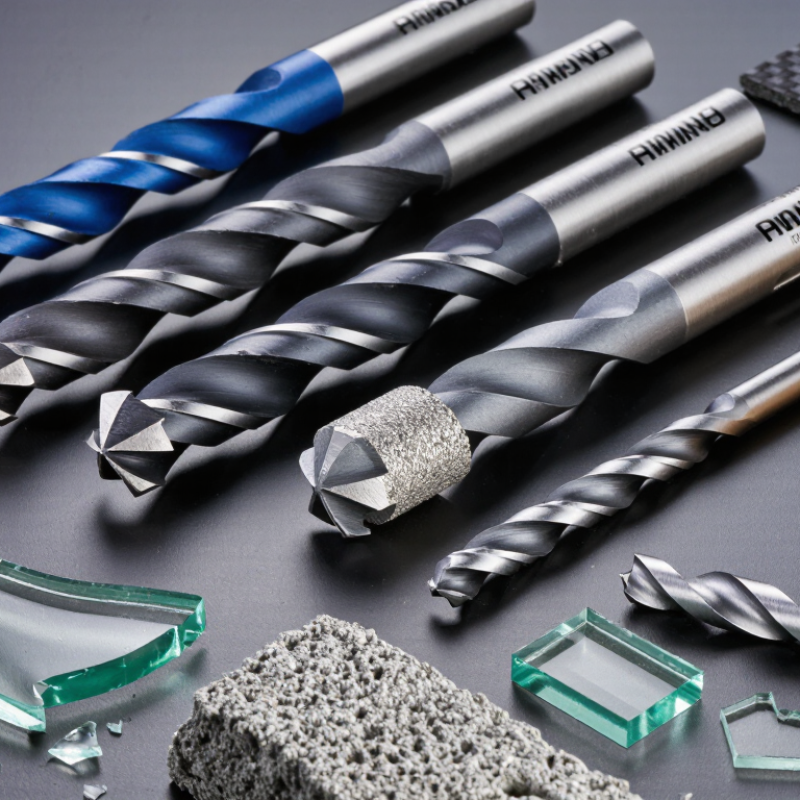
Drill bit material controls cutting speed, heat resistance, edge life, and surface quality. In practical workshop use, high-speed steel handles ordinary wood, plastic, and mild steel well. It is affordable and easy to sharpen, but heat quickly weakens its cutting edge.
Cobalt alloy bits contain more heat-resistant material than standard high-speed steel. They suit stainless steel and other tough metals when used with steady pressure and cutting fluid. Carbide bits are harder and retain sharp edges under heavy wear. However, they are brittle and can chip when the drill wobbles or the workpiece moves. Slow, controlled handling matters.
Masonry requires a carbide-tipped bit because brick and concrete wear away ordinary steel. For glass and ceramic tile, a diamond-grit or specialized carbide tip cuts more safely. Wood often needs a brad-point design, not simply a harder material. Its center spur reduces wandering and leaves a cleaner entry hole.
The neat chart is not the whole truth. A coated bit may resist friction, yet coating cannot fix poor alignment or excessive feed pressure. I have seen durable bits fail quickly in overheated holes. Cooling, correct speed, and a firm setup often matter as much as the alloy. Some material choices still involve compromise. A harder edge may last longer, but it may also break sooner during interrupted drilling.
Choosing the best drill bit in 2026 depends less on the tool’s label and more on the material beneath it. Wood usually responds well to brad-point bits, which start cleanly and reduce wandering. For softwood, moderate speed and steady pressure help prevent torn fibers. Hardwood needs a sharper edge and slower feed. A backing board can protect the exit side from splintering.
Plastic requires more control. A sharp HSS twist bit often works, but excessive speed can melt the hole instead of cutting it. Keep the cut cool. Clamp thin sheets between sacrificial boards, and clear chips frequently. Acrylic and brittle plastics may need a step bit or a specialized geometry. Test on scrap first, because one setting rarely suits every plastic.
Composite materials demand closer inspection. Plywood and MDF behave like wood, yet adhesives and dense layers can dull edges quickly. Fiberglass-reinforced panels may need carbide-tipped bits and light pressure. Carbon-fiber laminates create abrasive dust, so eye protection and suitable respiratory protection are essential. Use a backing surface when drilling through laminates. Slow pressure works. Still, bit selection is not perfectly predictable. A carbide bit may cut a dense composite well but chip its surface if pushed too hard. Material thickness, reinforcement, moisture, and temperature can change the result. A small test hole remains one of the most reliable checks.
Wood generally benefits from a brad-point bit that starts cleanly and clears chips efficiently. Plastic is best drilled with a sharp bit and moderate cutting speed to reduce melting and grabbing. Abrasive or fiber-reinforced composites commonly require carbide-tipped edges because glass and mineral fibers wear ordinary high-speed steel quickly. The scores represent practical selection priorities on a 1–5 scale, where 5 indicates the strongest requirement.
Masonry materials are not equally hard. Brick usually needs a carbide-tipped masonry bit with a fluted body. Its broad cutting edge breaks the surface without excessive heat. Concrete demands more impact resistance, especially when aggregate appears beneath the first few millimeters. A rotary hammer and carbide head work better than a standard drill. Reinforced concrete is different again. Diamond core bits cut more cleanly through dense concrete and embedded steel.
USGS Mineral Commodity Summaries 2025 estimated about 1.5 billion metric tons of crushed stone were produced in the United States during 2024. That scale reflects how often contractors encounter abrasive aggregate. Stone surfaces can damage low-quality tips quickly. Diamond segments are usually the safer choice for granite, marble, and engineered stone. For softer block, a conventional masonry bit may be enough. Test a small hidden area first.
USGS Mineral Commodity Summaries 2025 estimated about 1.5 billion metric tons of crushed stone were produced in the United States during 2024.
Dust control also affects bit choice and job quality. OSHA limits respirable crystalline silica exposure to 50 micrograms per cubic meter over an eight-hour shift. Use local extraction, wet drilling, or both when suitable. Keep the bit aligned, clear debris often, and reduce pressure if the tool stalls. I still sometimes choose a faster bit for a short hole. That shortcut is not always wise. Heat, crooked entry, and chipped edges can turn a five-minute task into a repair.
(Sources: USGS Mineral Commodity Summaries 2025; OSHA Respirable Crystalline Silica Standard.)
2026 Best Drill Bits: What Materials Need Special Types?
Selecting Specialized Bits for Metal, Glass, Tile, and Ceramics
Choosing the best drill bit in 2026 starts with the workpiece, not the tool drawer. Metal, glass, tile, and ceramics respond differently to pressure, heat, and vibration. In my workshop, I match the bit to the surface before setting the drill. This short pause prevents chipped edges and overheated tips. For steel and other metals, use high-speed steel or cobalt alloy bits, depending on hardness. Cutting fluid reduces heat and helps the bit maintain a clean edge. Keep speed moderate. Excessive force can twist the bit or enlarge the hole.
Glass needs a diamond-grit or carbide-tipped glass bit with a stable guide. Place masking tape over the mark to reduce wandering. Use water for cooling, but keep it away from electrical connections. Drill slowly, with almost no downward pressure. Glass can look calm until it suddenly cracks. That warning is easy to underestimate. A backing board may reduce breakout as the bit exits.
Tile and ceramics need different choices. Glazed tile often suits a carbide-tipped spear-point bit, while dense porcelain usually needs diamond grit. Start without hammer action, then increase pressure gradually. I have learned that a sharp bit matters more than brute force. Still, no bit lasts forever. Inspect worn edges, listen for squealing, and stop when heat rises. My own mistakes taught me this: rushing a small hole can create a costly replacement job. Test on a spare piece when the material or finish is unfamiliar.
| Workpiece Material | Recommended Bit Type | Cutting Tip or Abrasive | Typical Geometry | Starting Speed Guidance | Lubrication or Cooling | Key Technique and Limitations |
|---|---|---|---|---|---|---|
| Mild Steel | High-speed steel twist bit; cobalt-alloy bit for frequent or heavier work | HSS; cobalt-alloy HSS improves heat resistance | 118° point for general work; 135° split point helps reduce wandering | Moderate speed with firm feed; reduce speed as diameter increases | Cutting oil is recommended, especially for larger holes | Use a pilot hole only when needed. Keep the bit cutting rather than rubbing, because excessive speed can overheat and soften the cutting edge. |
| Stainless Steel | Cobalt-alloy HSS bit with a split point | Cobalt-alloy HSS; harder coatings may improve wear resistance | 135° split point; relatively short, rigid flute length is preferred | Low to moderate speed with steady pressure | Use cutting oil or a suitable metalworking lubricant | Prevent work hardening: do not dwell, skate, or use a light rubbing feed. Maintain continuous cutting pressure and clear chips frequently. |
| Hardened Steel | Carbide drill for stable setups; specialized carbide or abrasive processes may be required at very high hardness | Solid carbide or carbide-tipped cutting edges | Rigid, short design with a point suited to the manufacturer’s hardness range | Low to moderate speed; use a rigid drill press rather than a flexible handheld tool | Use compatible coolant or cutting fluid when permitted | Confirm hardness before drilling. Carbide is brittle and can chip from vibration, interrupted cuts, or excessive side loading. |
| Aluminum and Soft Nonferrous Metals | HSS bit with a high-helix flute and polished surface | HSS; uncoated or low-friction surfaces help reduce aluminum buildup | 118° point with generous flute space; specialized aluminum geometry may use a sharper point | Relatively high speed with controlled feed | Light cutting fluid or a lubricant suitable for aluminum | Withdraw the bit periodically to break and clear chips in deep holes. Avoid packed flutes, which can seize the bit and damage the workpiece. |
| Cast Iron | General-purpose HSS or carbide-tipped masonry-style bit for abrasive grades | HSS for ordinary cast iron; carbide for very abrasive or hard cast iron | Standard twist geometry; use a rigid setup and avoid excessive point pressure | Low to moderate speed | Often drilled dry; use coolant only if compatible with the work and chip-control method | Cast iron produces abrasive chips and may be brittle. Support the workpiece securely and clean abrasive dust from the tool and machine. |
| Tempered or Heat-Treated Glass | Diamond-coated glass bit or diamond hole saw | Diamond abrasive on the rim or tip | Continuous abrasive rim; no conventional cutting flutes | Low speed with light, even pressure | Continuous water cooling is normally required | Verify that the glass is not tempered: tempered glass can shatter when drilled. Use eye protection, support the panel, and avoid impact or excessive pressure. |
| Borosilicate or Non-Tempered Glass | Diamond-coated glass bit or diamond hole saw | Fine diamond abrasive | Continuous rim that grinds rather than cuts | Low speed; begin with minimal pressure until a stable groove forms | Water cooling helps control heat and extend abrasive life | Use a guide or template to prevent wandering. Keep the bit wet, avoid dry drilling, and reduce pressure near breakthrough to limit chipping. |
| Glazed Ceramic Tile | Carbide-tipped tile bit for small holes; diamond hole saw for cleaner or larger holes | Carbide spear point or diamond abrasive rim | Spear-point carbide tip; diamond hole saw for larger diameters | Low speed with light pressure; do not use hammer action | Water cooling is beneficial for diamond tools; intermittent cooling may suit small carbide bits | Place masking tape over the mark to reduce wandering. Drill through the glaze slowly, then use the appropriate bit for the substrate behind the tile. |
| Porcelain Tile | Diamond-coated porcelain bit or diamond hole saw | Diamond abrasive | Continuous diamond rim designed for dense, low-porosity material | Low to moderate speed with steady, light feed | Water cooling is strongly recommended | Porcelain is denser and more abrasive than ordinary ceramic tile. Keep the tool cool, avoid hammer mode, and allow the abrasive rim to do the work. |
| Unglazed Ceramic and Terracotta | Carbide-tipped masonry bit; diamond bit for precise or larger holes | Carbide cutting tip or diamond abrasive | Two-flute masonry style or continuous abrasive rim | Low to moderate speed; use light pressure | Usually drilled dry for small holes; water can control dust and heat where appropriate | Support fragile pieces from below. Reduce pressure as the bit exits to prevent breakout, and use dust extraction when drilling dry. |
| Stoneware, Marble, and Granite | Diamond core bit or diamond hole saw | Diamond abrasive segments or continuous diamond rim | Core-cutting cylinder; designed for abrasive grinding | Low speed with consistent feed | Continuous water cooling is preferred | Use a rigid guide for starting and keep the tool aligned. Check for hidden reinforcement, voids, or plumbing before drilling. |
| Brick, Concrete, and Block | Carbide-tipped masonry bit; rotary-hammer bit for reinforced or dense concrete | Carbide tip with a masonry-cutting profile | Fluted body for dust removal; hammer-rated designs for impact drilling | Low to moderate speed; use hammer action only with a hammer-rated bit | Normally drilled dry with dust extraction; water may be used under suitable site controls | Do not use hammer action on glass, tile, or brittle ceramics. Check for electrical cables, pipes, and structural reinforcement before drilling. |
Selection note: Speed guidance is comparative rather than a fixed RPM because the correct value depends on bit diameter, machine type, material hardness, hole depth, and manufacturer specifications. Always secure the workpiece and wear suitable eye protection.
Choosing the right drill bit begins with the material, not the tool cabinet.
Wood needs brad-point bits for clean entry. Masonry requires carbide tips and controlled pressure. Stainless steel demands heat-resistant cobalt or suitable HSS bits.
Using the wrong type creates excess heat, wandering holes, and premature breakage.
Safety remains critical.
OSHA’s silica standard limits respirable crystalline silica exposure to 50 micrograms per cubic meter over eight hours (29 CFR 1926.1153). Use local extraction, wet methods where appropriate, and a properly fitted respirator. NIOSH recommends a lower exposure limit of 0.05 mg/m³ for respirable crystalline silica over a ten-hour workday. Dust is not harmless.
Keep hands away.
Compatibility also includes speed, chuck size, and cutting fluid. A bit designed for steel may burn in thin aluminum without proper lubrication. Clamp the workpiece, check the manufacturer’s speed range, and stop when vibration changes. I often see users blame poor steel quality when the real problem is excessive pressure. That mistake is easy to repeat.
Maintenance extends cutting life.
Wipe bits after use, remove chips with a brush, and store them dry. Inspect edges under bright light. Small chips matter. Sharpen only when the geometry remains recoverable; badly worn bits should not be forced back into service. OSHA and NIOSH guidance supports controlling exposure, but neither replaces site-specific training or risk assessment. A perfect checklist does not exist. (Sources: OSHA 29 CFR 1926.1153; NIOSH silica exposure recommendations.)
Match the bit to the metal’s hardness. High-speed steel suits many metals. Cobalt alloy handles harder steel and higher heat. Use moderate speed and cutting fluid. Excessive force can twist or break the bit.
Use a diamond-grit or carbide-tipped glass bit. Place masking tape over the drilling mark. It helps prevent wandering. Drill slowly with almost no downward pressure. Cool the area with water, keeping water away from electrical connections.
Support the glass firmly and consider a backing board. Keep pressure light as the bit exits. Glass may appear stable, then crack suddenly. I still underestimate this risk sometimes. Slow work is safer.
Glazed tile often works well with a carbide-tipped spear-point bit. Dense porcelain usually needs diamond grit. Start without hammer action. Increase pressure gradually. Test on a spare tile first.
Common causes include excessive pressure, high speed, poor lubrication, and wrong bit selection. Stop when heat rises sharply. A squealing sound can signal trouble. Let the bit cool before continuing.
Use brad-point bits for clean entry in wood. Masonry needs carbide tips and controlled pressure. Stainless steel usually requires heat-resistant cobalt or suitable high-speed steel bits. One general-purpose bit rarely performs well everywhere.
Use local extraction and wet methods when appropriate. Wear a properly fitted respirator for respirable silica exposure. Keep dust away from your breathing zone. Dust is not harmless. Site-specific training still matters.
Wipe each bit clean and remove chips with a brush. Store bits dry. Inspect cutting edges under bright light. Sharpen only when the original geometry remains recoverable. Badly worn bits should be replaced. Forcing them back into service is a poor repair.
Choosing the right drill bit begins with understanding how different materials affect cutting performance, durability, and safety. Bit materials and tip designs vary widely, so wood, plastic, and composite materials usually require sharp, controlled bits that reduce tearing, melting, or cracking. Masonry such as concrete, brick, and stone needs tough bits designed to withstand abrasive surfaces and impact. For metal, glass, tile, and ceramics, specialized cutting edges and careful speed control are essential. This guide explains what materials require special drill bits and how to select the correct option for each project.
It also covers compatibility between bits, drills, and operating modes, helping users avoid poor results and unnecessary wear. Proper pressure, suitable speed, cooling when needed, and regular cleaning can significantly extend bit life. By matching the bit to the material and maintaining it correctly, users can improve accuracy, protect work surfaces, and complete drilling tasks more safely and efficiently.
